What is the "Legacy Debt Crisis" that Interop Intelligence solves?
+
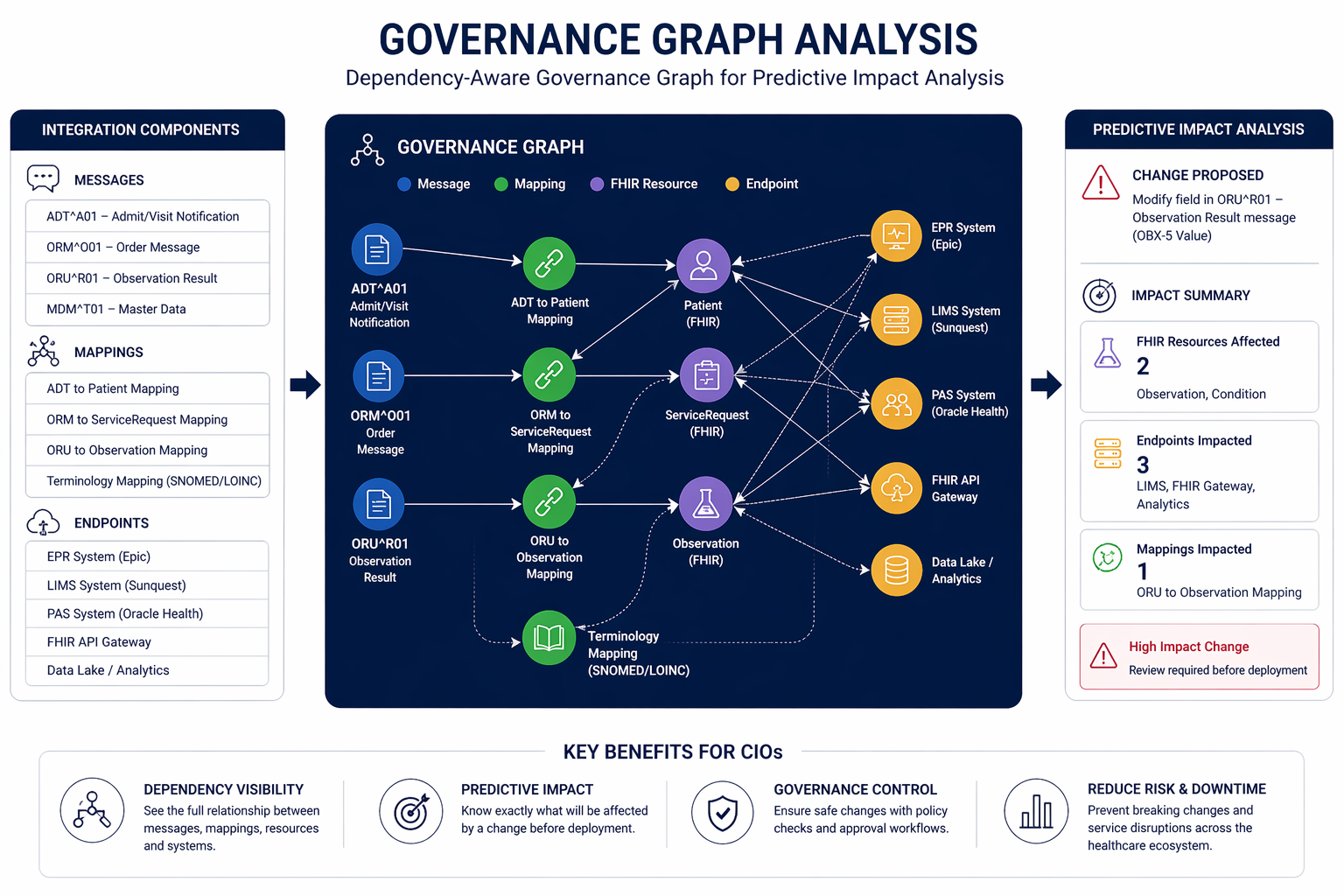
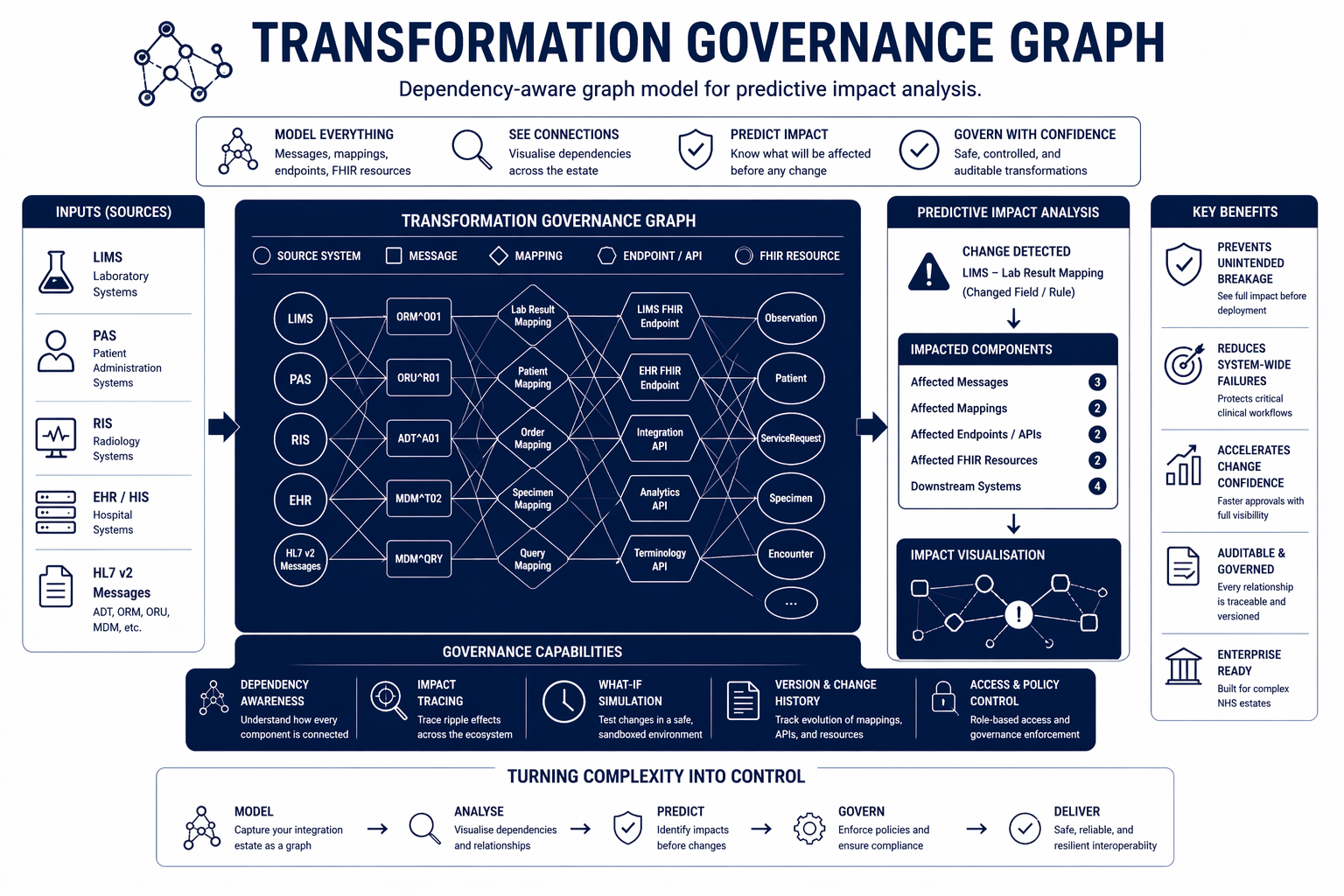
The Legacy Debt Crisis refers to the deepening chasm between entrenched legacy data infrastructures and the government-mandated transition to modern FHIR standards. More than 80% of frontline clinical data remains trapped in legacy HL7 v2 formats, file-based silos, and proprietary database structures. This creates severe operational bottlenecks, endangers patient safety through information gaps, and imposes a multi-billion pound "maintenance tax" on an already strained healthcare system. With 215 NHS Trusts and 42 Integrated Care Systems facing a mandatory 2026 deadline to adopt modern interoperability standards, every NHS Trust is effectively a "forced buyer" of interoperability governance. Interop Intelligence closes this gap by acting as an intelligent governance system rather than a passive data pipe.
How do "Reasoning Chains" improve clinical safety over traditional integration engines?
+
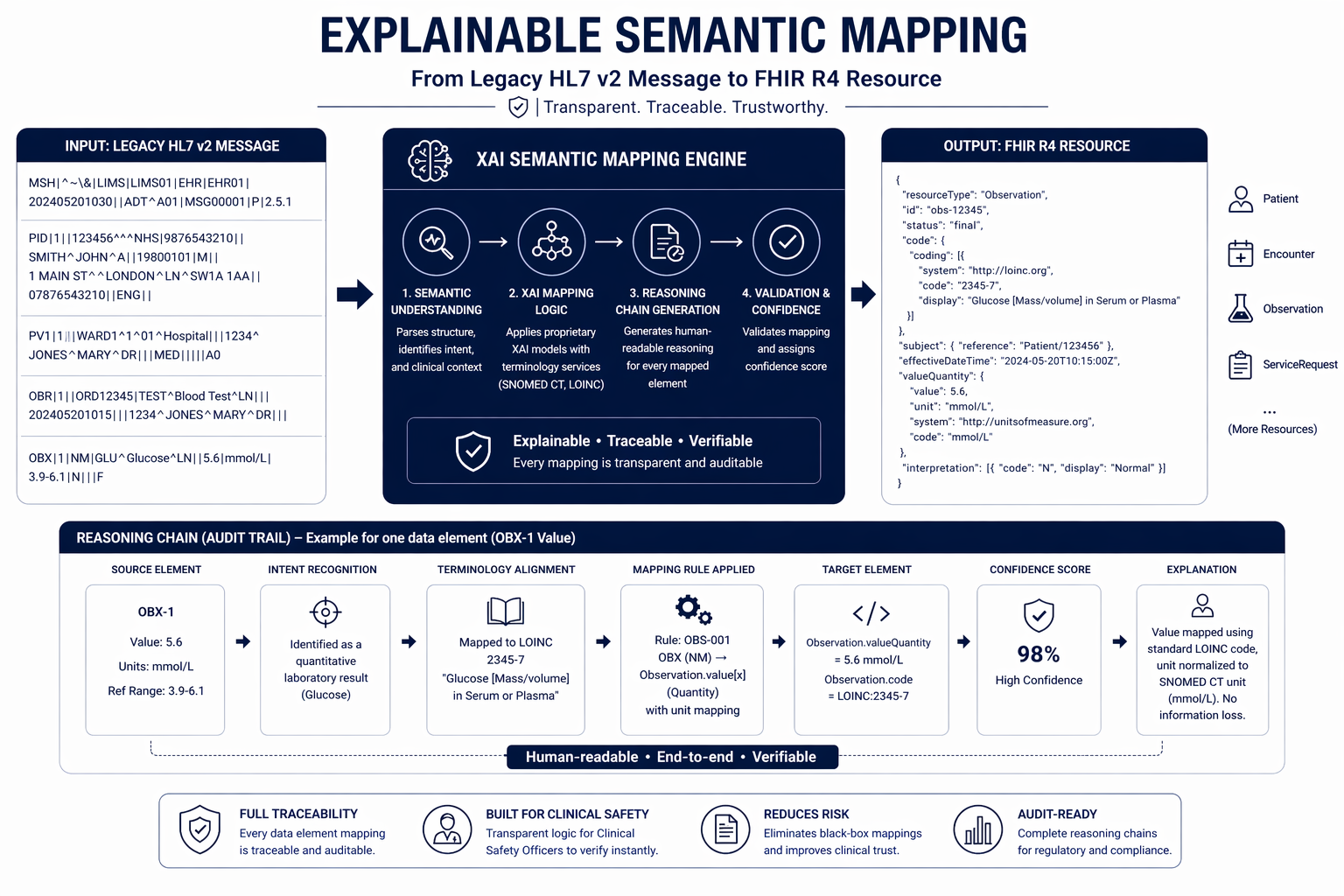
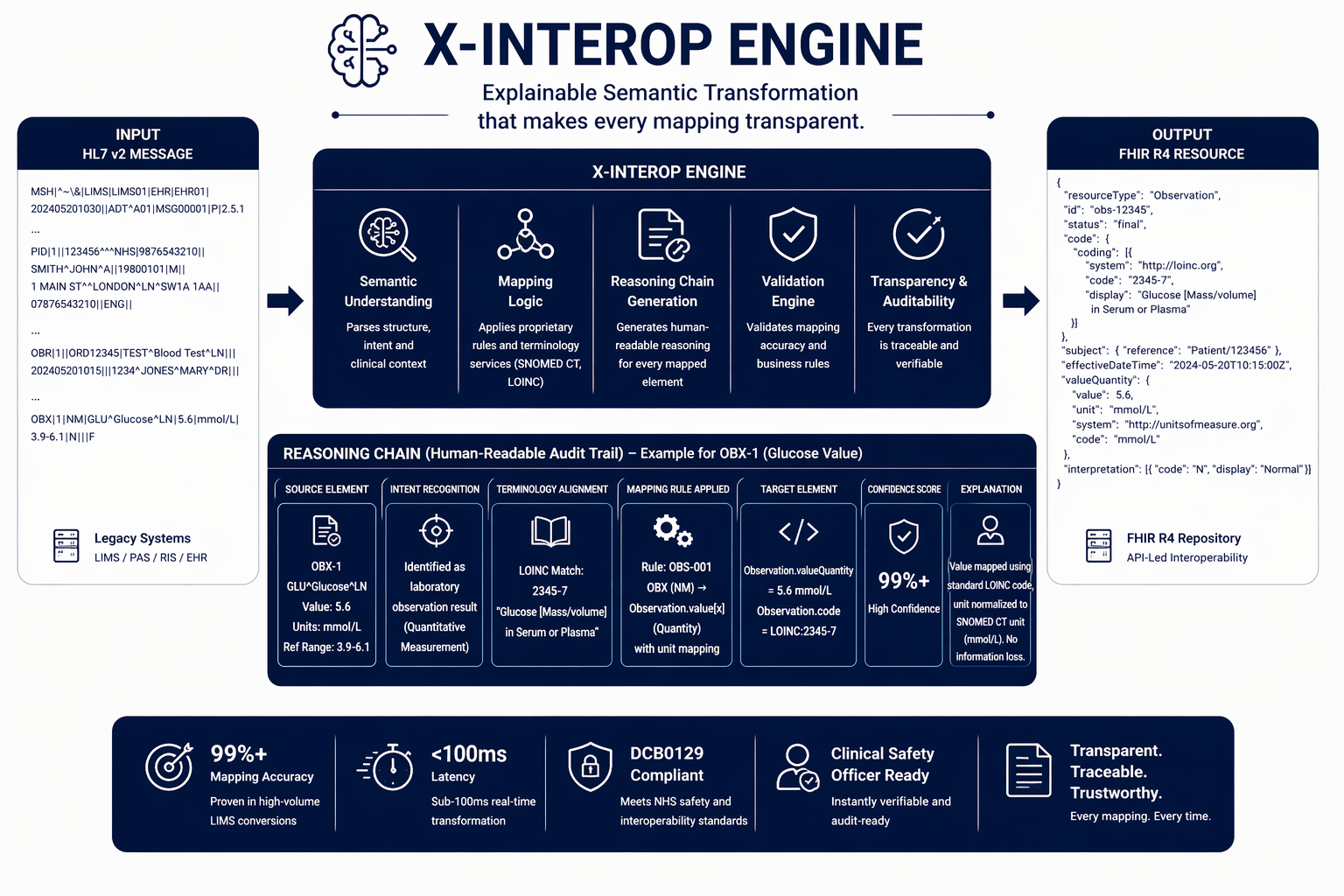
Traditional integration engines treat data transformation as an opaque "black-box" process data enters one end and exits the other without any visibility into how semantic mappings were handled. This makes it nearly impossible for Clinical Safety Officers (CSOs) to verify the integrity of transformed data, leading to "clinical trust deficits." Interop Intelligence 's Reasoning Chains generate a human-readable explanation for every individual data element converted covering the "why" behind each mapping decision. CSOs can audit and sign off on automated logic instantly, satisfying DCB0129/DCB0160 compliance requirements. This is the only platform in the UK market that provides this level of transparency for AI-driven clinical data transformation.
Does Interop Intelligence require replacing existing integration engines like Mirth or Rhapsody?
+
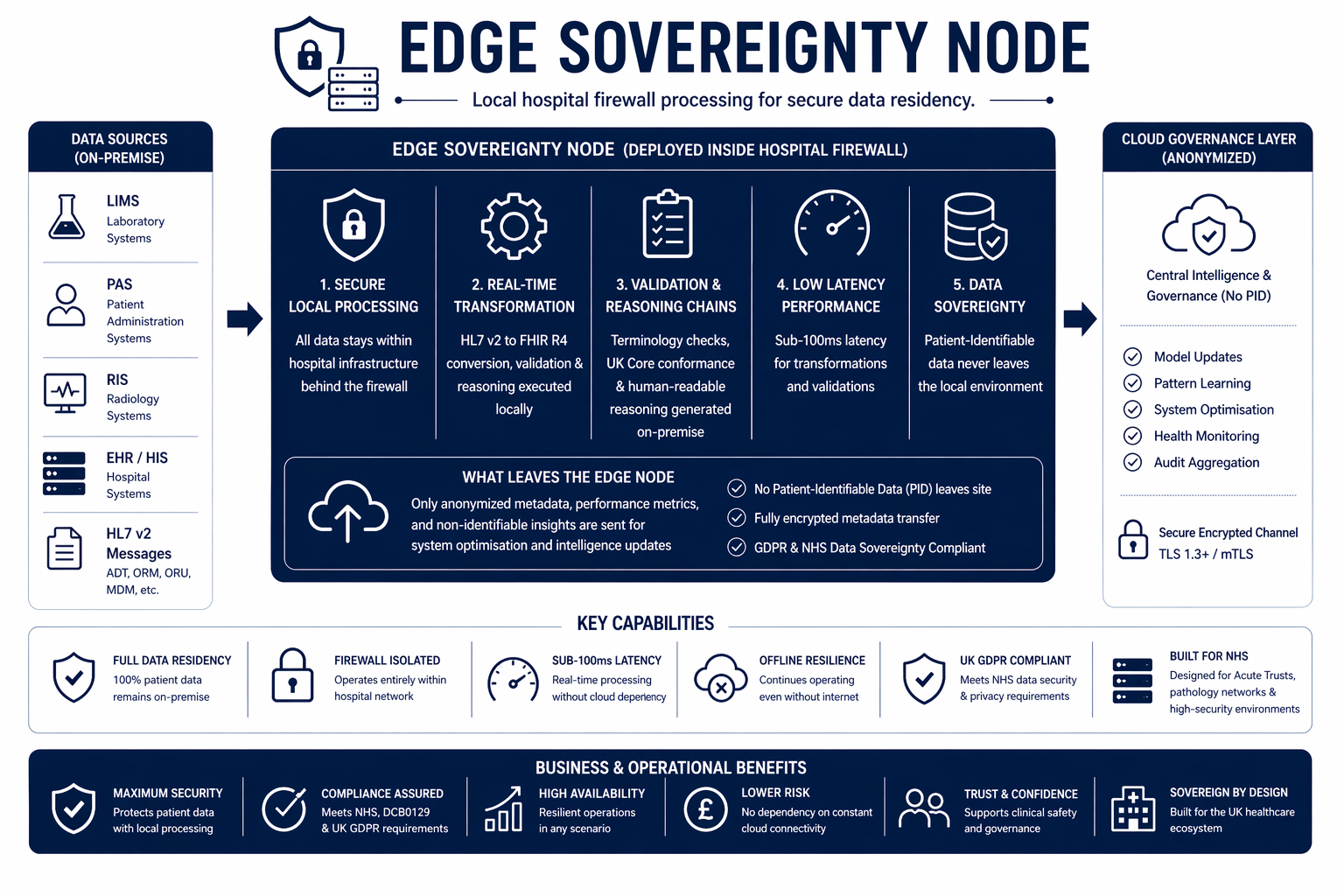
No. Interop Intelligence is specifically designed as a "Governance Wrapper" that sits on top of existing integration engines including Mirth Connect, Rhapsody, and InterSystems HealthShare without requiring any "rip and replace" of existing infrastructure. The modular "Intelligence Layer" plugs into existing engines via standard APIs, allowing providers to upgrade their governance without hardware replacement. For institutions requiring edge processing, a compact secure Integration Node is available for local processing within the hospital firewall. The platform deploys primarily via secure cloud SaaS with Microsoft Azure UK South/UK West data residency.
How does the platform comply with NHS DTAC 2.0, DCB0129, and UK GDPR?
+
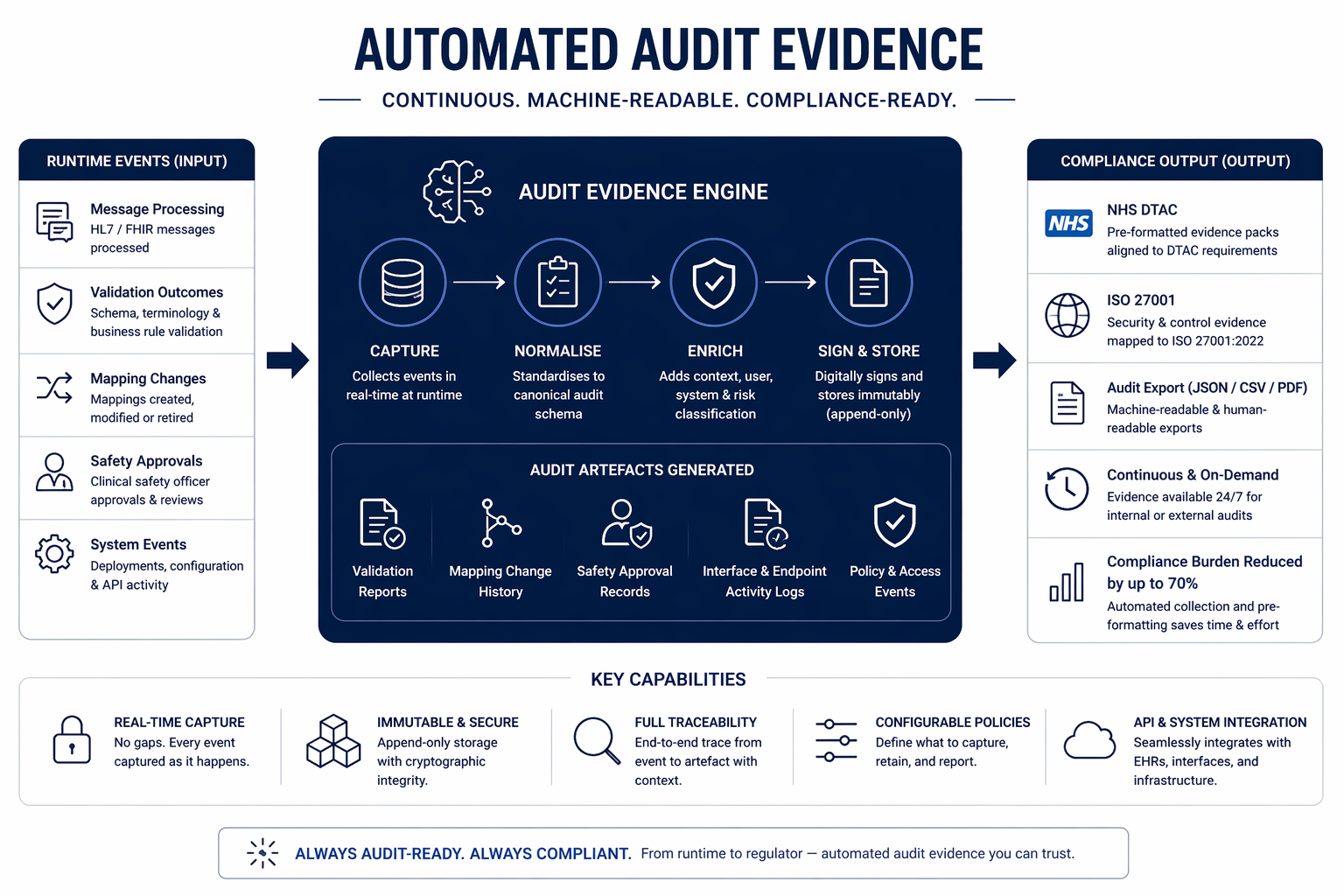
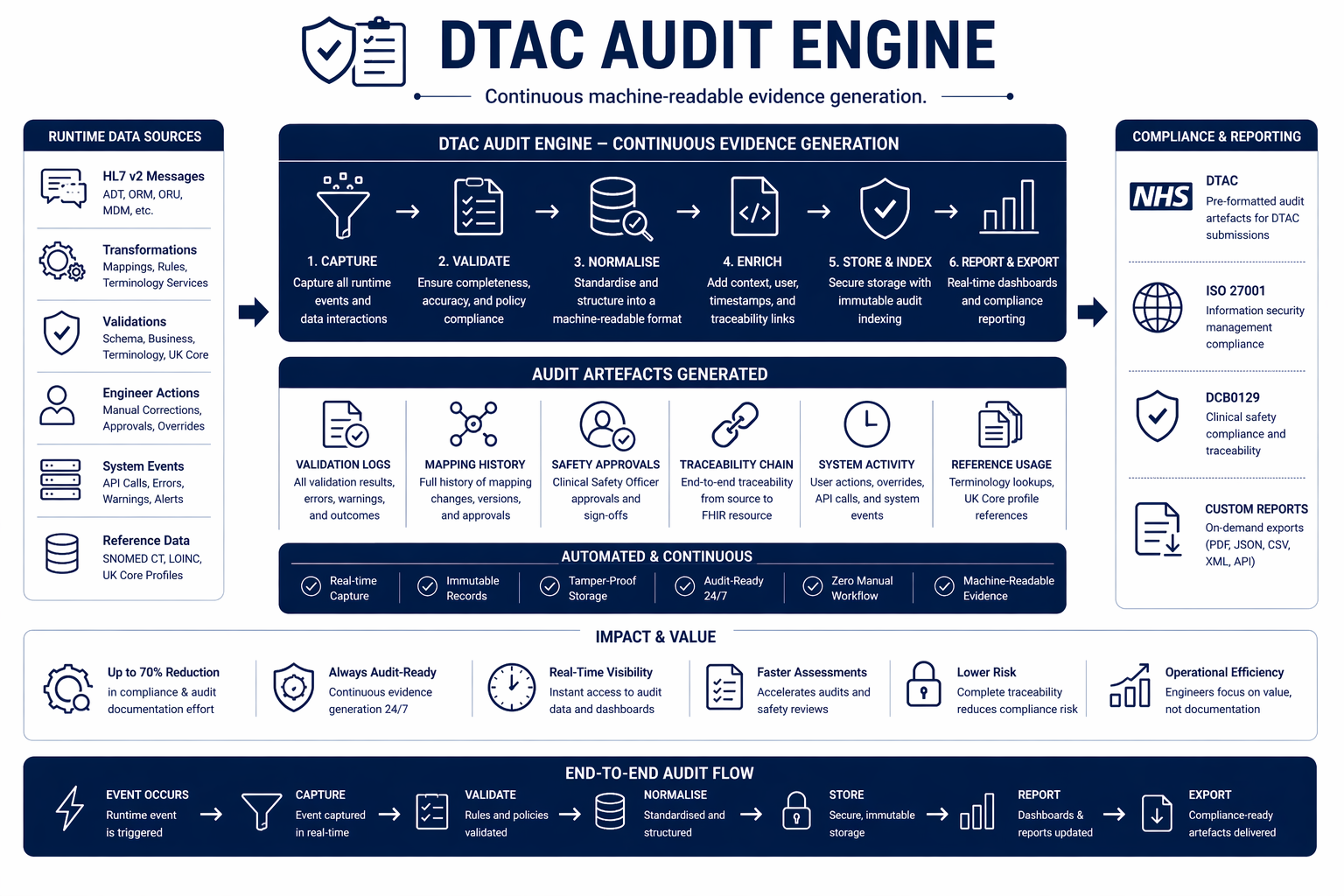
Interop Intelligence is engineered to be "Compliant by Design," specifically addressing all five NHS DTAC domains. For Clinical Safety (DCB0129), the platform's unique Reasoning Chains act as a real-time clinical safety log. For Data Protection, pre-configured DPIAs tailored for FHIR-based data streaming are included. All identifiable patient data (PII) remains within the provider's secure local network via Edge Node processing only anonymized metadata is transmitted for system optimisation, ensuring 100% UK data sovereignty. Security architecture is aligned with ISO/IEC 27001 and NCSC Cyber Essentials Plus standards. The platform is registered with the ICO as a data processor, with strict adherence to the "Data Protection by Design and Default" principle.
What is the current development status and what validation has been completed?
+
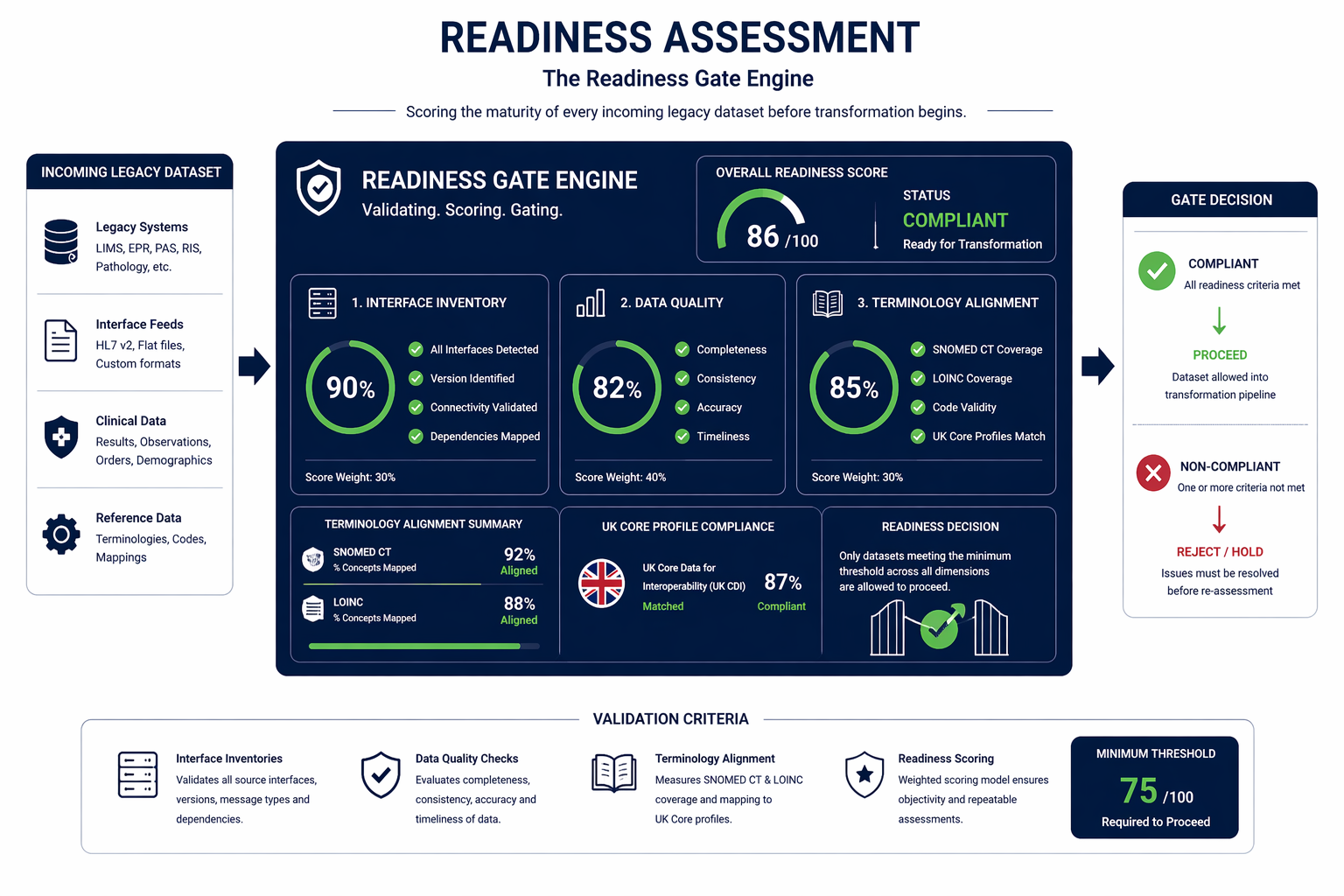
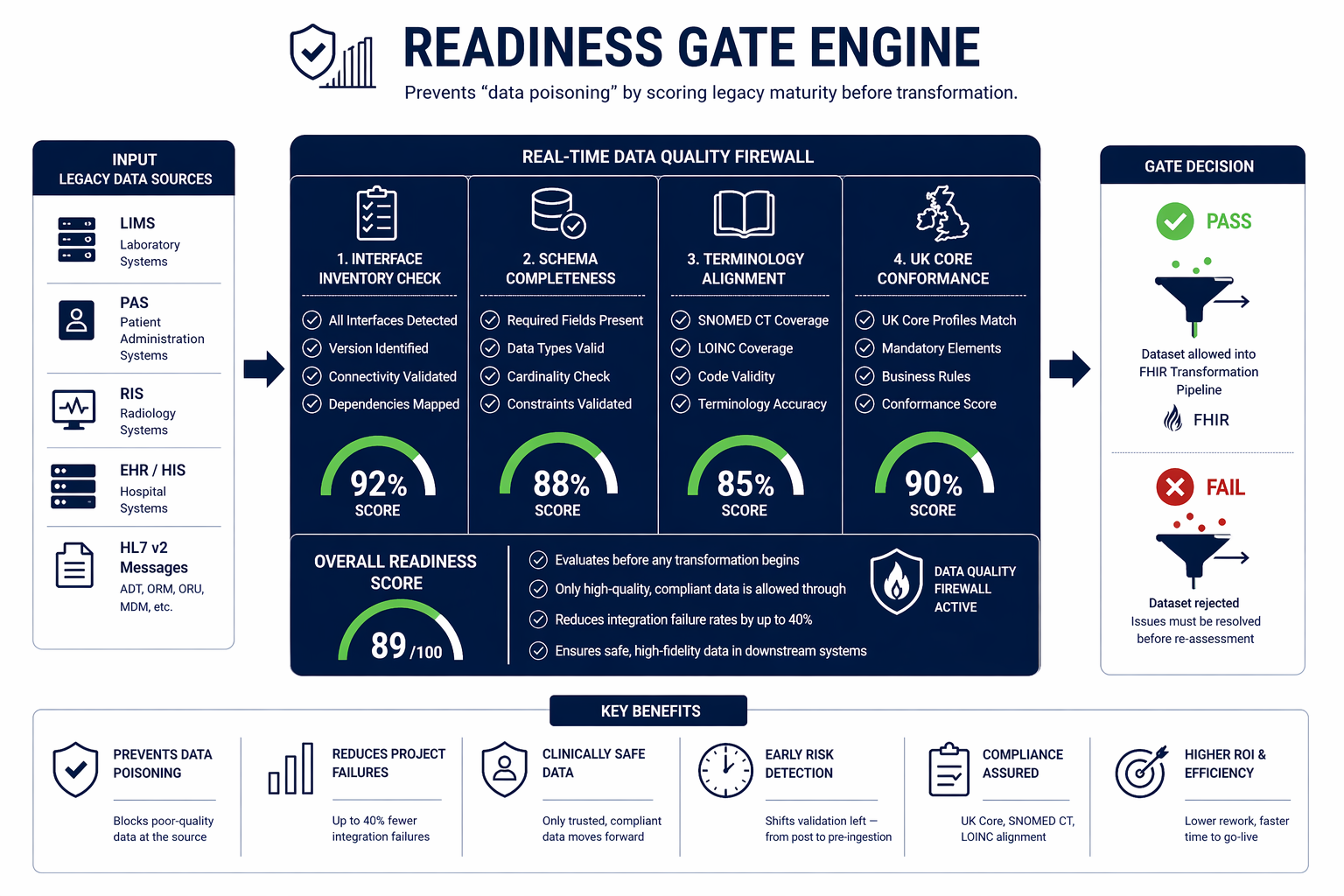
Interop Intelligence is at TRL 7 System Prototype Demonstration in Operational Environment. The functional prototype has undergone rigorous testing in simulated high-volume clinical environments. Validated results include 99.2% mapping accuracy with zero data-loss across 100,000 test messages, sub-100ms processing latency for real-time ADT patient feeds, 100% flagging of terminology mismatches during the Readiness Gate phase, and maintenance of operational integrity in Edge Mode during cloud-connectivity disruption. Reasoning Chains are currently under independent Clinical Trial Technician review for DCB0129 transparency compliance. Both cloud-native and on-premise Edge versions are stable and ready for full-scale pilot deployment. Patent documentation is in progress for the proprietary Reasoning Chain logic and Readiness Gate methodology.